
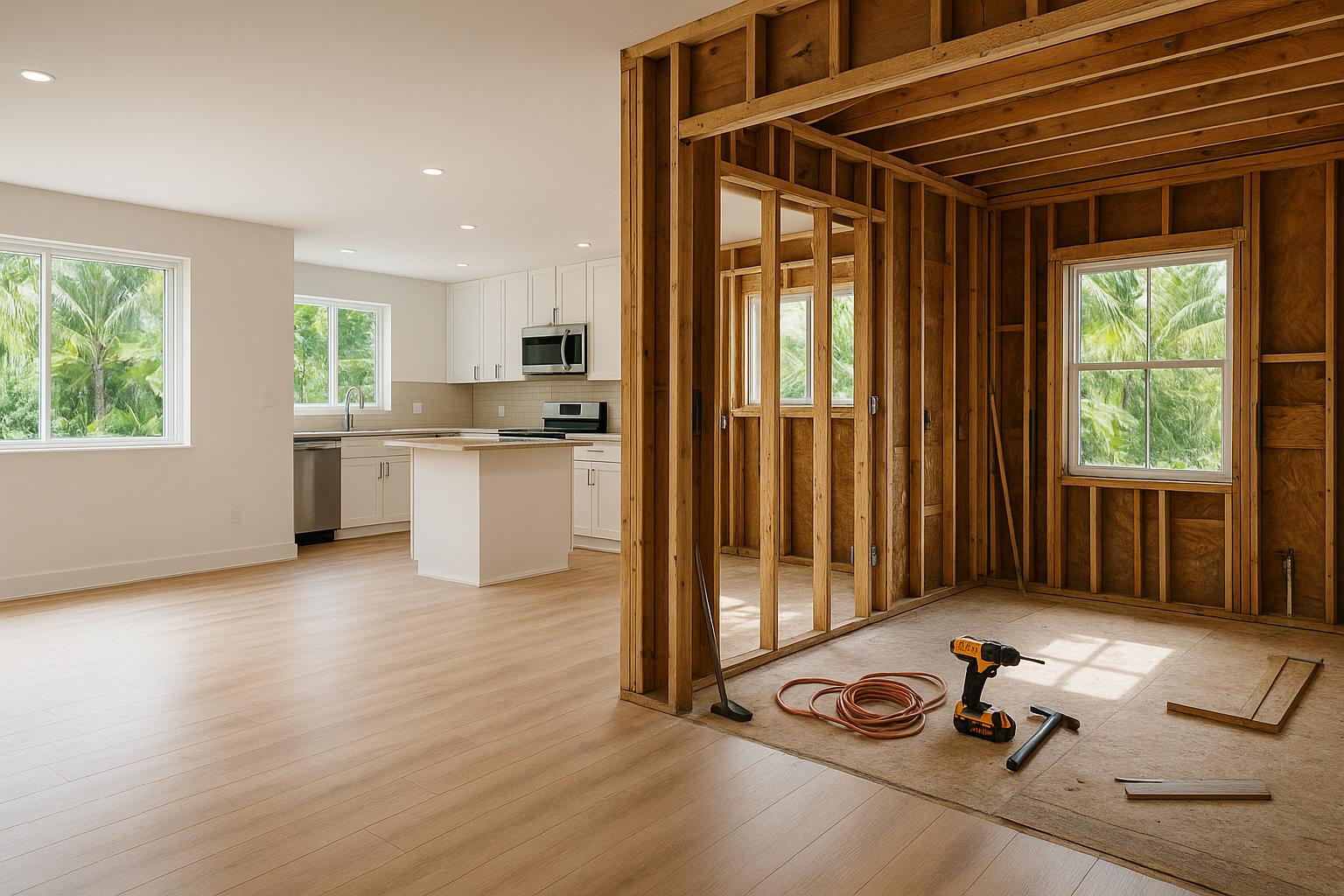
Why Whole-Home Renovations Are Booming in Miami
Miami's real estate market has always been competitive, and homeowners are increasingly choosing to renovate rather than relocate. With rising home prices across neighborhoods like Coral Gables, Kendall, and Doral, it often makes more financial sense to transform the home you already own into the space you've always wanted. But a whole-home renovation is a major undertaking, and without a solid plan, it can quickly spiral into a stressful, over-budget nightmare.
Whether you're updating a 1970s ranch in Hialeah or modernizing a waterfront property on Miami Beach, this guide will walk you through the essential steps to plan a whole-home renovation that stays on track, on budget, and delivers the results you're dreaming of.
Step 1: Define Your Goals Before You Pick Up a Hammer
Before you start browsing Pinterest or calling contractors, sit down and get clear on why you're renovating. Your goals will shape every decision that follows.
- Are you renovating to sell? Focus on upgrades with the highest return on investment, like kitchen remodeling, bathroom updates, and fresh flooring.
- Are you renovating to stay? Prioritize the spaces and features that will improve your daily life, whether that's an open-concept living area, a spa-like master bathroom, or a room addition for a growing family.
- Are you addressing structural or code issues? Older Miami homes often need updated electrical, plumbing, or hurricane-impact windows to meet current building codes.
Write down your must-haves versus your nice-to-haves. This list will become your north star when tough decisions come up later in the project.
Step 2: Set a Realistic Budget (and Add a Buffer)
One of the biggest mistakes homeowners make is underestimating the cost of a whole-home renovation. In Miami, a comprehensive remodel can range widely depending on the size of your home, the scope of work, and the quality of materials you choose.
Here's how to approach your budget wisely:
- Get multiple estimates. Talk to at least two or three licensed remodeling contractors in Miami to understand the realistic cost range for your project.
- Allocate funds by priority. Put the largest portion of your budget toward the rooms and systems that matter most — typically the kitchen, bathrooms, and any structural work.
- Add a 15-20% contingency fund. Surprises happen, especially in older homes. Hidden water damage, outdated wiring, or permit requirements can add unexpected costs. A buffer keeps these surprises from derailing your entire project.
Being upfront about your budget with your contractor also helps them recommend materials and design solutions that deliver the best value without cutting corners.
Step 3: Hire the Right Remodeling Team
Your contractor will make or break your renovation experience. In a market like Miami, where construction demand is high and building codes are strict, choosing the right team is critical.
Here's what to look for:
- Proper licensing and insurance. Florida requires contractors to be licensed. Verify credentials through the Florida Department of Business and Professional Regulation.
- Local experience. A contractor who has worked extensively in Miami understands local permitting processes, hurricane code requirements, and the unique challenges of South Florida's climate, like moisture management and mold prevention.
- A clear communication style. You'll be working closely with this team for weeks or even months. Choose someone who listens, explains things clearly, and provides detailed written estimates and timelines.
- References and a portfolio. Ask to see completed projects similar in scope to yours. Talk to past clients about their experience.
At Home Upgrade & Renovation, we guide Miami homeowners through every phase of the process, from initial design consultation to final walkthrough, so nothing falls through the cracks.
Step 4: Create a Phased Timeline
A whole-home renovation doesn't happen all at once. Breaking the project into phases keeps things organized and minimizes disruption to your daily life.
A typical phasing plan might look like this:
- Phase 1: Demolition and structural work. This includes removing walls, updating the layout, and addressing any foundation, roofing, or framing issues.
- Phase 2: Systems and rough-ins. Electrical, plumbing, and HVAC work happens behind the walls before anything cosmetic goes in.
- Phase 3: Finishes. This is where the transformation becomes visible — flooring installation, cabinetry, countertops, interior painting, tile work, and fixtures.
- Phase 4: Final details and inspection. Hardware, trim, touch-ups, and the all-important final inspection to ensure everything meets code.
Your contractor should provide a detailed timeline with milestones so you always know what's happening and what's coming next.
Step 5: Plan for Where You'll Live During Construction
This is the step many homeowners forget until it's too late. Depending on the scope of your renovation, living in the home during construction may not be practical or safe.
Consider these options:
- Stay and phase the work. If your renovation can be done room by room, you may be able to stay in the home. Your contractor can help you plan a sequence that keeps at least one functional bathroom and a livable sleeping area available at all times.
- Temporarily relocate. For extensive renovations that involve gutting the kitchen, removing flooring throughout the home, or major structural changes, a short-term rental may be the smarter choice. Factor this cost into your overall budget.
Step 6: Don't Skip the Permits
In Miami-Dade County, most significant renovation work requires building permits. Skipping permits might seem like a way to save time and money, but it can lead to serious consequences down the road, including fines, failed inspections when you try to sell, and even having to tear out completed work.
A reputable remodeling contractor will handle the permitting process for you, ensuring that all work is inspected and approved according to local codes. This is especially important in South Florida, where hurricane mitigation standards add an extra layer of requirements.
The Payoff: A Home That Feels Brand New
A well-planned whole-home renovation is one of the most rewarding investments you can make. When it's done right, you get a home that looks stunning, functions beautifully for your lifestyle, and holds significantly more value in Miami's competitive real estate market.
The key is preparation. Define your goals, set a realistic budget, hire a team you trust, and stay organized throughout the process. With the right approach, your renovation will be something you look back on with pride — not stress.
If you're considering a whole-home remodel in Miami or the surrounding areas, Home Upgrade & Renovation is here to help you plan, design, and build the home you deserve. Reach out to us for a free consultation and let's talk about bringing your vision to life.